Interview with Holger Schulze
In commencing our new interview series, we are pleased to present these insightful responses from Dr Holger Schulze.
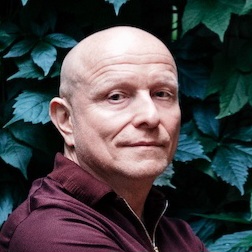
Holger Schulze is professor in musicology at the University of Copenhagen and principal investigator at the Sound Studies Lab. His sonic anthropology explores how sounds and listening in the 21st century stabilize, disrupt, and permeate everyday life. Artistic practices and everyday objects are both of equal concern to his sonic critique. As one of three editors-in-chief of The Bloomsbury Encyclopedia of Sound Studies, (along with Jennifer Stoever and Michael Bull) he fosters and disputes the pluriform artistic and scholarly research that emerged since he co-founded the world’s first master’s program in Sound Studies at the Berlin University of the Arts in 2006. His publications include: Meme Music (2026), Sonic Fiction (2020), and The Sonic Persona (2018).
1. What brought you to Sound Studies?
I began my studies at the university level in the 1990s. At that time, however, there were no programs of study focusing exclusively on sound culture and the history of listening. Therefore, I studied other research areas that allowed me to delve deeper into sonic traditions, soundtrack design, radio art, and audiovisual art. I earned my Ph.D. in Comparative Literature, writing about artistic practices that employ chance operations and aleatorics in literature, music, radio, and media arts. “Das aleatorische Spiel” (2020)—”The Aleatoric Game.” It wasn’t until the early 2000s that we developed the first Master of Arts in Sound Studies at the Berlin University of the Arts with artists, designers, composers, and sound artists. Around that time, the first monographs, articles, and collected volumes were published, and their authors, such as Jonathan Sterne, Michael Bull, Karin Bijsterveld, Veit Erlmann, and many others, seemed to use the term “Sound Studies” recurrently, which we had also settled upon. We could see that this was a significant, generative moment.
2. How have you seen the field developing in the last ten years? (And where do you see it going in the future?)
Since the 2000s, the broader field of sound studies has – in my understanding – undergone two significant changes. Initially, sound studies were primarily considered a research domain for historians, sociologists, and musicologists. Many research publications addressed aspects of sound technology, historical accounts, and concepts of listening, as well as their relation to historical and contemporary music cultures. The title of the remarkable inaugural journal article by Karin Bijsterveld and Trevor Pinch documents this focus: “Sound Studies: New Technologies and Music” (2004). Publications by Michael Bull, Jonathan Sterne, Karin Bijsterveld, and Veit Erlmann laid then the groundwork for sound studies, building upon scattered and often idiosyncratic modes of research represented in twentieth-century writings by Jacques Attali, Don Ihde, or Alain Corbin. Since the 2010s, however, the focus has increasingly shifted toward artistic and anthropological research approaches. Cultural studies of sound have embraced the experiential, sensory, and aesthetic aspects of listening and sounding. Writings by Salomé Voegelin, Marcel Cobussen, Jordan Lacey, Christopher Cox, and my work, “The Sonic Persona” and “The Bloomsbury Handbook of the Anthropology of Sound”, document this phase Most recently, around 2020, a shift toward an overtly political perspective has emerged, accompanied by a shift toward intersectional and indigenous studies, as evidenced by publications by Dylan Robinson, Nina Sun Eidsheim, Jennifer Stoever, Gavin Steingo and Jim Sykes, Gascia Ouzounian, Pavitra Sundar, and M. Shadee Malaklou. For me, the actual practices of sound culture and listening research became richer and more complex with each of these three phases. Ideally, this development will continue, leading to a more explicitly formulated mode of sonic critique. My recent research is moving in precisely that direction. In this sense, sonic critique can provide strong guidance for analyzing, understanding and transforming current listening and sounding practices.
3. Is there one particular sound that you encountered in previous work that you’d like people to know?
There are so, so many – I honestly don’t know where to start? Right off the bat I am thinking of the grey and rainy sounds in the genre of Shoegaze or even Dub, I write about in a piece on “Tangentiality in the Arts” (forthcoming 2027). But right after that I remember the imaginary spatialized and highly dynamic sound production of Anton von Webern’s “Sechs Stücke für Orchester” (1909), I imagine in the third section of “The Sonic Persona” (2018), titled “The Precision of Sensibility”. But I am also reminded of the sonic and sensory signatures of intimate encounters I wrote about in chapters for “The Bloomsbury Handbook of Sound Art” (2020) and “The Bloomsbury Handbook of the Anthropology of Sound” (2021). And, right now, I am also hearing the clumsy noise of a deer stumbling through a plastic toy castle in the meme “in the deer 2nite” replacing the legendary drumbreak in Phil Collins’ “In the Air Tonight”; just recently, I write about this meme - alongside so many other sounds - in my most recent book on “Meme Music” (2026). For this interview I wish to point out and focus on the functional sounds of public transport, I wrote about in “Sound Works” (2019), my proposal of a cultural theory of sound design: when I entered a subway station, at the time when we worked on that book, certain sounds announced almost every action taking place; albeit escorted by sounds from various phones and game consoles. From these sounds it is just a small step to —you are quite probably reading this book on—you had to listen to disjointed system sounds when you turned on your device on which you are reading this text: start up chimes, alert noises, and auditory warning signals, perhaps accompanied by your favorite music in the background or on your headphones. And after having written a bit about these sonic memories, I am now also thinking of the unsettling sounds in some of my most admired performances by artist and sound performer Carl-Friedrich Claus in one of his later works, ”Basale Sprech-Operationsräume” (i.e.: “Basic Speech Operating Spaces”) when he persistently clears his throat, stumbles, coughs, and bumps against equipment and furniture in the recording studio. You the reader are right now probably also clearing your throat I would guess.
4. While sound is ephemeral, it can also travel in many ways. Any thoughts?
This question left me dumbfounded and clueless for many days.
Towards the end of my ruminations and reflections on sounds traveling, transcending, and traversing, I realized: I can barely imagine a sound that does not traverse and transcend its area of origin.
I have a bigger issue with the traditional, well-established notion that sound is ephemeral. At first glance, one might be inclined to believe that. On the level of its time structure, this might also seem totally correct and trivial.
However, regarding the perception of sounds and their impact on listening communities and societies, on us as sonic personae and our more communal or more disrupted “sonic citizenship” (Marie Koldkjær Højlund and Morten Breinbjerg), this is not so clear.
5. What do you think is a common misconception around studying sound?
There is still a common misconception that one must be a composer, instrumentalist, or acoustician to be interested in studying sound.
While this may have been true for much of the 20th century, it’s clear that in the 21st century, it’s the listeners, the aficionados of listening and sounding, who engage with sound productions and sonic experiences in many ways.
I cannot think of any lifestyle, profession, or activity that does not entail sonic qualities. On this planet alone, we live together with just over eight billion sonic personae, and we might also include all animals and insects in this calculation. At some point in the future, we may include artificially created personae as well.
6. What are you working on right now?
In fall 2027, Bloomsbury publishes my fifth monograph, this time the topic touches on music history, musical genres, musical practices, and digital culture: “Meme Music”. As this book is released, my colleagues Alcina Cortez, Eric de Visscher, and Gabriele Rossi Rognoni and I are working on the proofs for “The Bloomsbury Handbook of Sound in Museums”, which should be available in stores in summer 2027, giving readers the opportunity to explore with us the current state of research, sound practices, and experiences in museums in the UK and in China, in Switzerland and the U.S., in South Korea and in Germany, in South-Africa and France, in Italy, Japan, Denmark, and beyond. We recently held with the Sound Studies Lab the first international conference on ambient music in Copenhagen, and more publications on this topic are on the way as well. And together with a colleague from Berlin, Gerriet Sharma, we are working on the concept of Critical Immersion Studies. Lastly, all of this is probably tied together with the earliest stages of my work on a monograph about the concept and the practice and the effects of Sonic Critique.
Sound Affairs’ new interview series with scholars working in different fields and disciplines aims to cover the latest developments in Sound Studies. What drives sonic research today? Which questions are worth asking (again)? What have we missed? Which histories are being uncovered? And how does this research possibly impact society? These and other questions are discussed in different installments. Stay tuned for more!
Enjoy Reading This Article?
Here are some more articles you might like to read next: